
Alpina Bio Ingredients AG — Zürich
Quality and certifications of our ingredients
A professional buyer does not choose a raw material based on a slogan, but on verifiable documents. Here are the certifications that accompany our erythritols and stevias, how batch traceability works, and what you can request before a wholesale order.
Batch file
The documents that accompany each batch
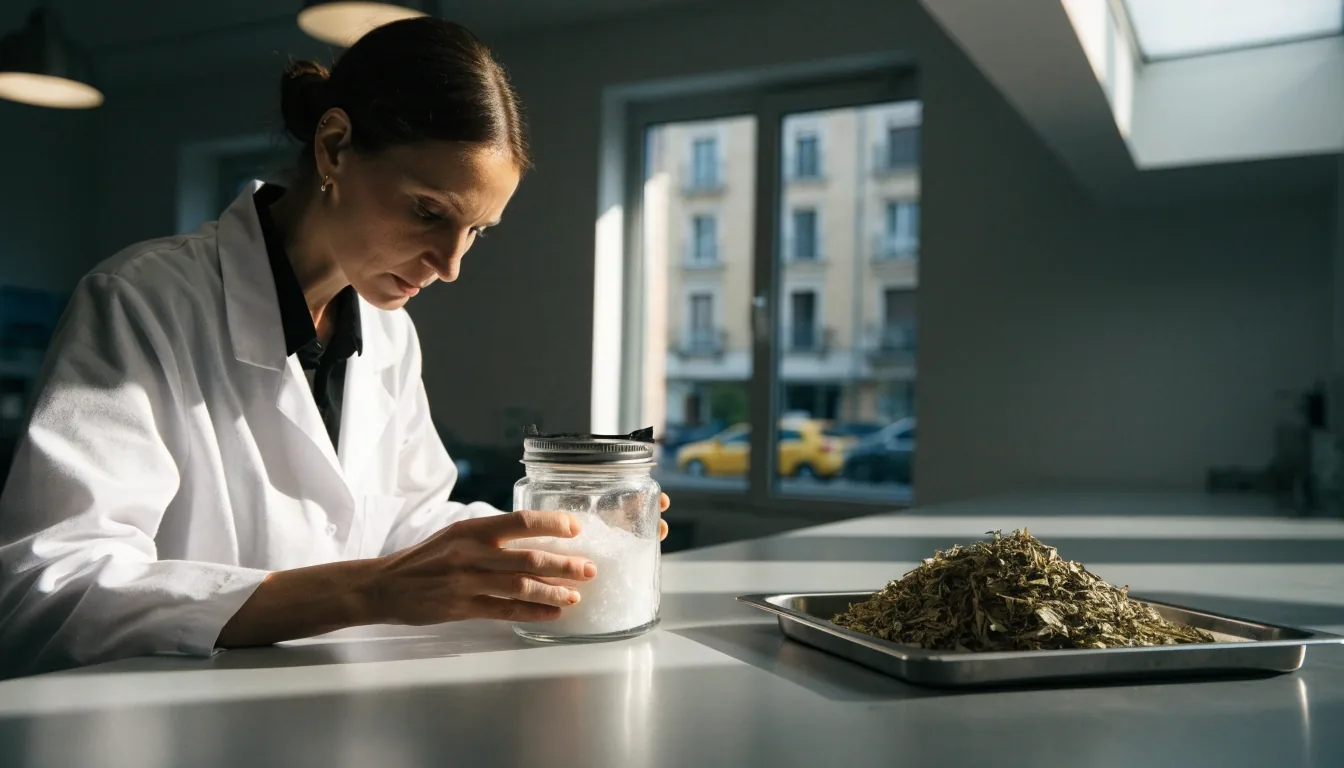
For each reference, we provide three documents that travel together: the technical specification, the certificate of analysis for the delivered batch, and the organic certificate for the supply chain. The specification indicates purity, particle size, moisture, and solubility. The certificate of analysis contains the results measured on the batch you receive, not a theoretical value copied from a sales sheet.
This is the chain that auditors look at during a quality audit or client listing. An incomplete file blocks validation just as surely as a non-conformity: both must be resolved before shipment, not during production.
What the specification describes
- Purityby reference
- Particle sizeby batch
- Moisturemeasured
- Solubilitymeasured
 Erythritol · stevia
Traceability: tracing back to the origin
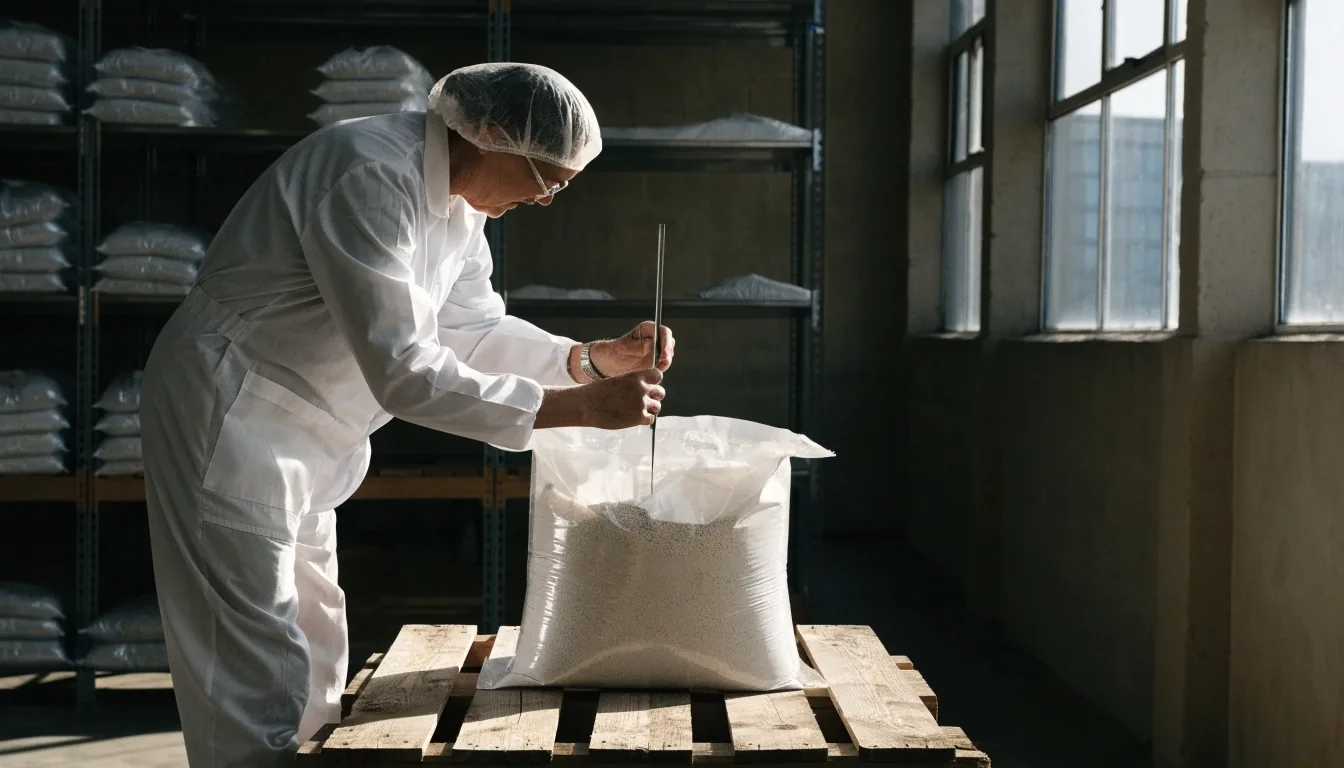
Each bag or big bag bears a batch number that refers to the origin of the raw material, the production date, and the supplier. This number is the key to the file: from it, we reconstruct the complete path of the product, from the plot or fermenter to your unloading dock.
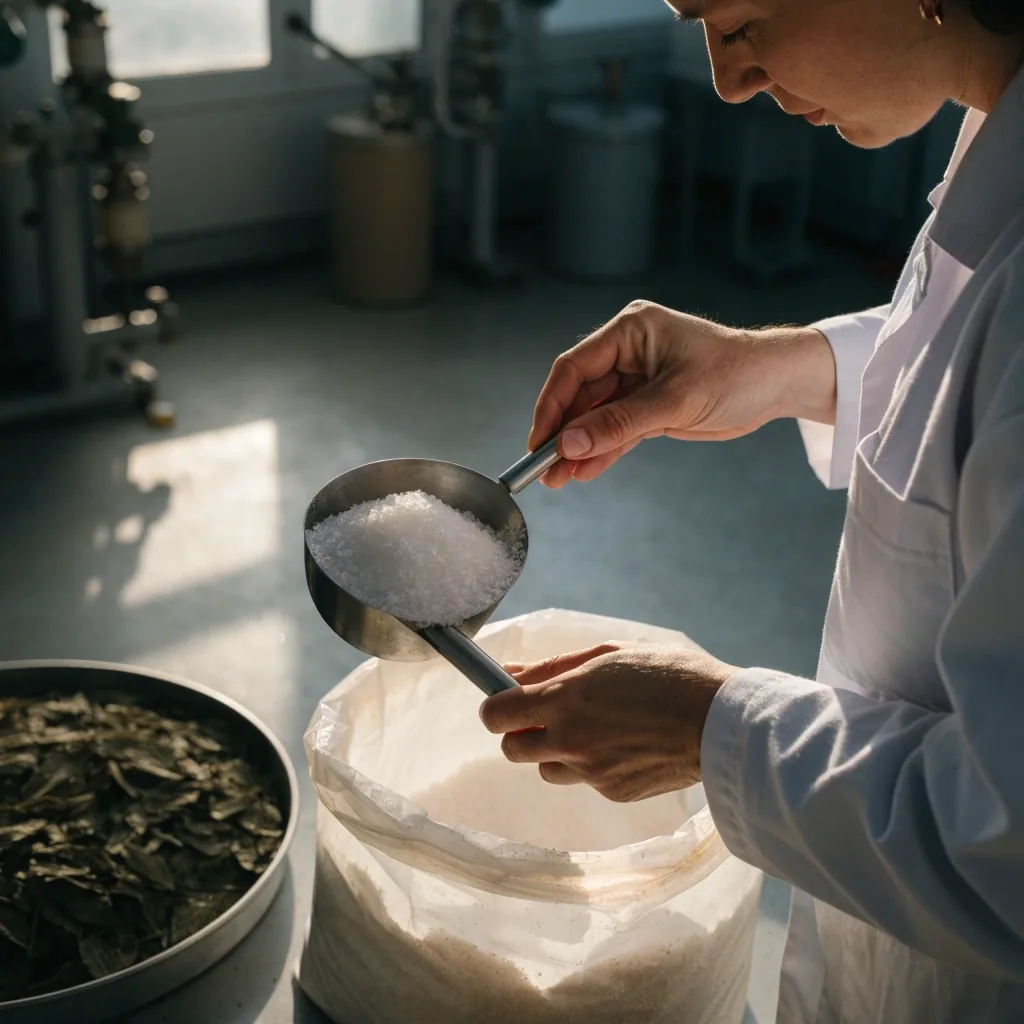
For erythritol, the origin is generally fermentation from organic corn, as found at Birkengold, whose product sheet indicates an organic corn base. For stevia, traceability concerns the extraction chain and the steviol content, which determines the actual sweetening intensity in your formulations.
- Batch
- Unique number per bag and big bag
- on the packaging
- Origin
- Raw material, process and supplier identified
- in the file
- Stevia
- Extraction chain and steviol content documented
- by reference
Supply chain certificate
Organic certifications: what they cover
An organic certification applies to a product and a supply chain, not a website. It certifies that the raw material has been produced and processed according to defined specifications, with checks at every stage — from cultivation to factory exit.
When you need to meet Swiss specifications, it is the supply chain certificate, combined with the batch certificate of analysis, that serves as proof. A logo alone is not enough: it indicates affiliation, not the compliance of the batch you have in front of you.
Documents available by reference
-
Organic supply chain certificate
Issued by the producer's organization, it covers production and processing.
-
Batch certificate of analysis
Results measured on the delivered batch: purity, moisture, particle size.
-
Technical specification
The reference framework to which the batch is compared before shipment.
3
documents provided with each batch — specification, certificate of analysis, organic certificate
For regular production, the consistency of this documentation is worth more than a one-time price difference: it avoids having to reconstruct a file in the middle of production.
What we cannot certify
We do not issue organic certifications ourselves. We pass on those of our suppliers and their organizations, with the batch number that links them to your delivery. If a client requests a specific certificate that the supply chain does not provide, we say so. This transparency avoids misunderstandings during listing or auditing — and we prefer a clear refusal to a promise that is impossible to document.
Transmitted
Our suppliers' certificates
We relay the documents issued by the producers and their organizations, without rewriting them.
Not issued
In-house certification
We do not produce any of our own certifications: this role belongs to accredited organizations.
Outside our control
What depends on the suppliers
Upstream supply chain practices are not under our direct control; we document them, we do not guarantee them.
How we choose our suppliers
We work with producers who document their supply chain, not just their finished product.
Raw material origin
We ask where the material comes from, not just what it contains.
Processing method
Fermentation, extraction, drying: the process determines the consistency of the product.
Controls in place
Who samples, who analyzes, how often — and who signs the result.
Certificate of analysis per batch
A supplier unable to provide it is rejected, even if their price is lower. A low price without documentation costs more during an audit.
Food quality and storage hygiene
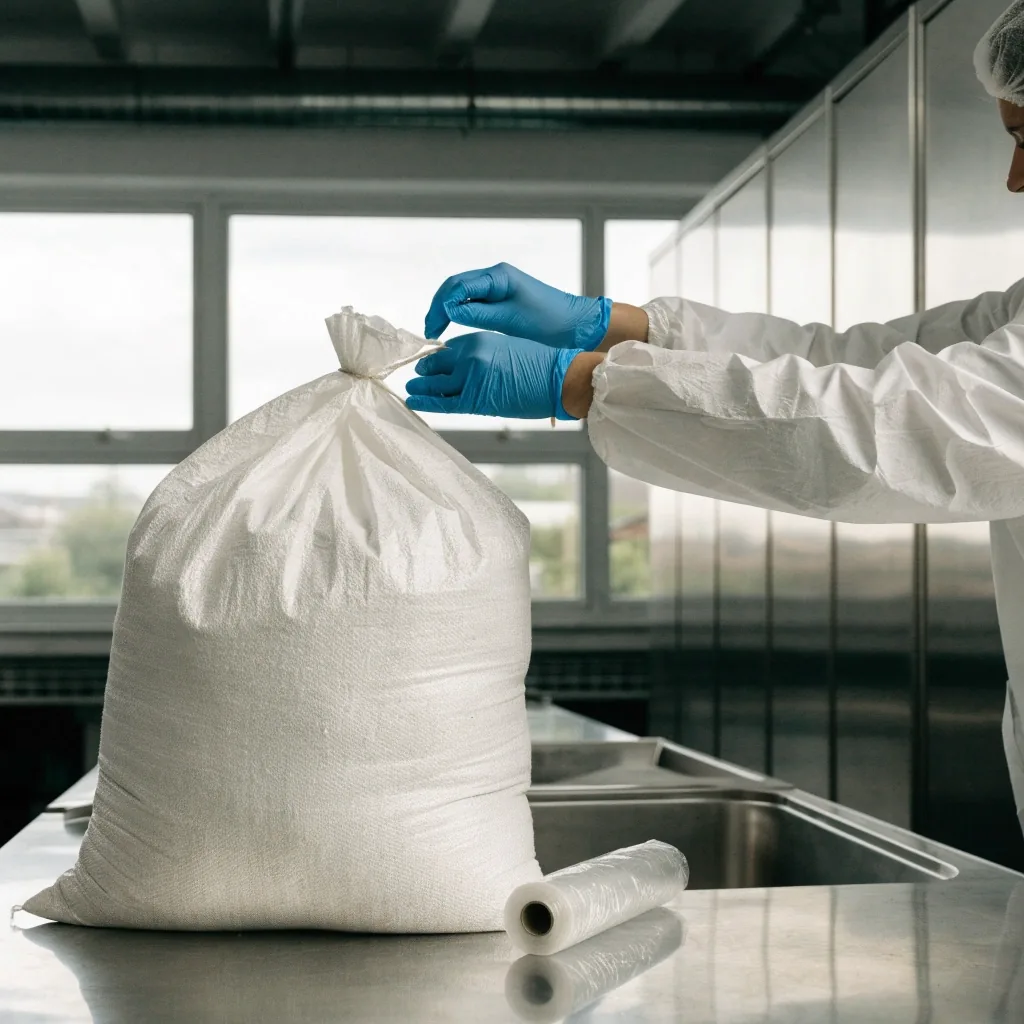
Our products are intended for food use and handled according to appropriate hygiene rules. Storage away from humidity is critical for erythritol and inulin, which clump together upon contact with humid air. A poorly closed big bag can turn a fluid powder into an unusable block in a few weeks.
We deliver in packaging lined with a food-grade liner to limit contamination during transport and handling. If your premises are humid, plan for an appropriate storage space: elevated, ventilated, closed, and away from direct heat sources.
To be planned by the buyer
- A dry, elevated, and ventilated room for big bags
- Rotation of batches by date of receipt
- Systematic resealing after each sampling
Check compatibility with your specifications
If your end customer imposes precise thresholds, send us their specifications before ordering. We compare these requirements with the product specification and available documentation, then we answer you point by point: what is covered, what is not, and what should be requested beforehand.
It is better to identify an incompatibility before delivery than to discover it during production. Regarding purity thresholds, especially for high-purity stevia, the margin can be thin: a difference of a few tenths of a percent changes the dosage in a recipe and therefore the taste of the finished product.
What we compare against your specifications
Purity
Required thresholds
Particle size
Target reference
Humidity
Accepted limit
Documentation
Expected documents
Each point is compared to the actual product specification, never to an indicative catalog value.
What this changes for your production
A complete batch file allows you to respond to an audit without searching for information in several departments, and to seriously compare two offers: with equal specifications, the difference is made on documentation and consistency, not on the commercial promise.
For a bakery or a factory running continuously, the challenge is simple: the same recipe must yield the same result for the next batch. It is documented consistency — not the price of the day — that protects your production. Find our sustainable production commitments on the dedicated page.
Discover our sustainable productionFrequently asked questions about traceability
The questions we receive most often before listing or a first supply.
Can I receive the certificate of analysis before delivery?
Yes, upon request, as soon as the batch is identified. The certificate of analysis corresponds to the batch actually prepared for your order, so it is issued at shipment and not at the time of order. We send you the technical specification immediately, then the certificate as soon as it is available.
How to verify the origin of an already delivered batch?
Note the number printed on the bag or big bag and send it to us. We find the origin of the raw material, the production date, and the supplier, then we send you the corresponding file. Keep this number: it is the reference to cite during an audit.
Are your packages suitable for storage in a humid room?
Our packages are lined with a food-grade liner, which protects the product during transport and normal handling. They do not replace a dry room: erythritol and inulin clump together upon contact with humidity. If your storage area is humid, plan for elevation and ventilation before ordering in large quantities.
Can I order a documented sample before a large volume?
Yes. A documented sample allows you to test the behavior of the product in your recipe before committing to an order by the kilo or ton. Request it via the contact page by specifying the reference and the intended use; we will indicate what accompanies the sample and the lead time.
Request the documentation for your next reference
Tell us the target product and your intended use. We will send you the technical specification, the documents available for the corresponding sector, and a clear answer on what is documented and what is not.
Monday – Friday: 8:00 AM – 5:30 PM · Bahnhofstrasse 42, 8001 Zürich